
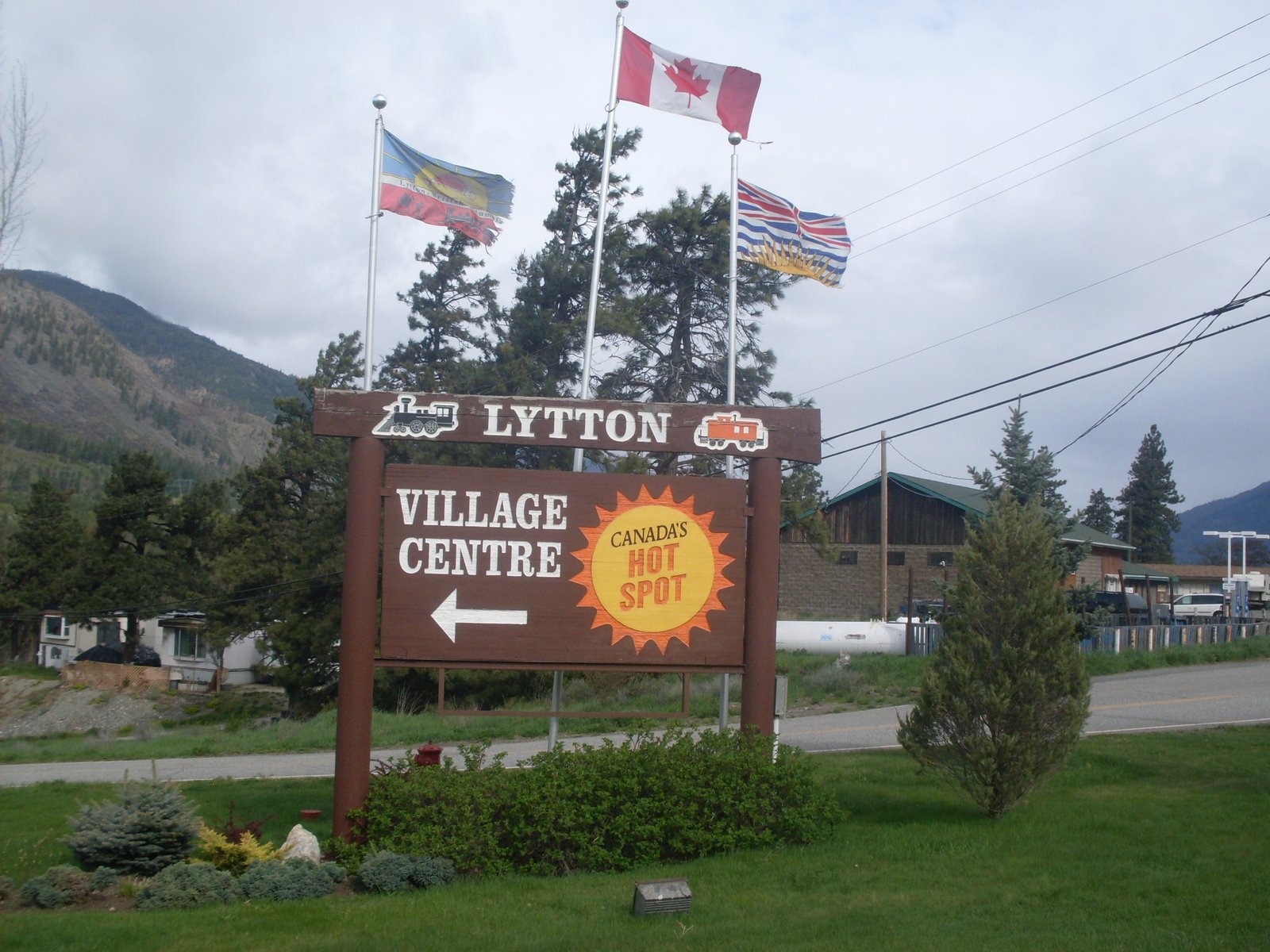
On June 29, 2021, Lytton, BC hit 49.6°C — still the hottest temperature ever recorded in Canada. That’s an extreme, but the BC Interior routinely sits in the high 30s and low 40s through July and August, and the inside of a closed trailer or a covered truck bed runs far hotter than the air around it. Peer-reviewed vehicle-interior research (McLaren, Null and Quinn, 2005) shows a closed cabin climbing to 43°C in 20 minutes and past 50°C within an hour on an ordinary 27°C day; a dark trailer roof or truck bed liner sitting in direct BC Interior sun goes well beyond that. A pallet of electronic control modules, a case of lab reagents, or a drum of industrial adhesive doesn’t need a heat wave to take damage — it needs an afternoon on a flatbed with the wrong tarp.
What Actually Cooks in a Closed Trailer
Electronic control modules and PLCs are commonly rated for storage up to somewhere around 70°C, but performance and battery life degrade well before that ceiling — a sealed enclosure sitting at 55-60°C for several hours is already outside the range most manufacturers warranty. Lithium-ion battery packs are worse: sustained heat accelerates degradation and, past a certain threshold, raises real thermal runaway risk, which is why battery shipments carry their own handling requirements. Pharmaceuticals and lab reagents often specify storage at or below 25°C, with some requiring a 2-8°C cold chain — a few hours in a hot trailer can void a batch outright. Adhesives, resins, coatings and paint are formulated to cure or separate at specific temperatures; sustained heat during transit can trigger that reaction early, ruining the product before it ever reaches the job site.
What Hotshot Pricing Actually Pays For
A dedicated hotshot run costs more than a standard LTL rate, and there’s no reason to soften that. The premium buys a truck that goes straight from pickup to delivery — no cross-dock, no hours sitting in an open yard at a freight terminal waiting for a linehaul trailer to fill up, which is exactly where heat-sensitive freight takes the worst of it. It also covers deadhead miles on the return leg, tarping and load-securing time, and an after-hours dispatch premium when a call comes in outside normal business hours. Detention time — a driver waiting at a shipper’s dock past the agreed load window — runs $140/hour after a 30-minute grace period at each end, tracked separately, and a $375 flat layover applies if a load can’t move same-day. None of this is padding; it’s the actual cost structure behind a single dedicated truck instead of a shared trailer.
Equipment Standards That Actually Matter in Summer
A standard poly tarp blocks rain but does very little against solar heat gain — a reflective or insulated tarp is a meaningfully different piece of equipment, and it’s worth asking about specifically for anything temperature-sensitive. Load securement still matters even on a fast summer run: every strap and chain used carries its own stamped working load limit, and the number required scales with cargo length and weight under National Safety Code Standard 10, not with how urgent the run is. Cargo insurance isn’t legally mandated in Canada, but a reputable hotshot carrier carries it and can quote a real number — Canyon Runner insures freight at $2.00 per pound — ask for the certificate, not just a verbal assurance.
Before You Hand Over a Heat-Sensitive Load This Summer
Ask whether the truck carries a reflective or insulated tarp, not a standard poly tarp, for anything temperature-sensitive. Ask how long the load will actually sit — at the shipper’s dock, in transit, and at any stop — before it’s back in a climate-controlled space. Confirm the carrier’s real door-to-door transit window, not just a same-day promise that could mean anything from two hours to ten. Ask for proof of cargo insurance and the actual coverage amount, not just a claim that it exists. And confirm there’s a direct line to dispatch or the driver if conditions change mid-route, rather than a call centre that has to relay the message. A carrier that can answer all five without hesitation is one that’s actually built for summer freight, not just willing to take the job.
Thumbnail photo: Lytton, BC’s welcome sign, “Canada’s Hot Spot,” by Andybremner2012, via Wikimedia Commons, licensed under CC BY-SA 4.0.
