
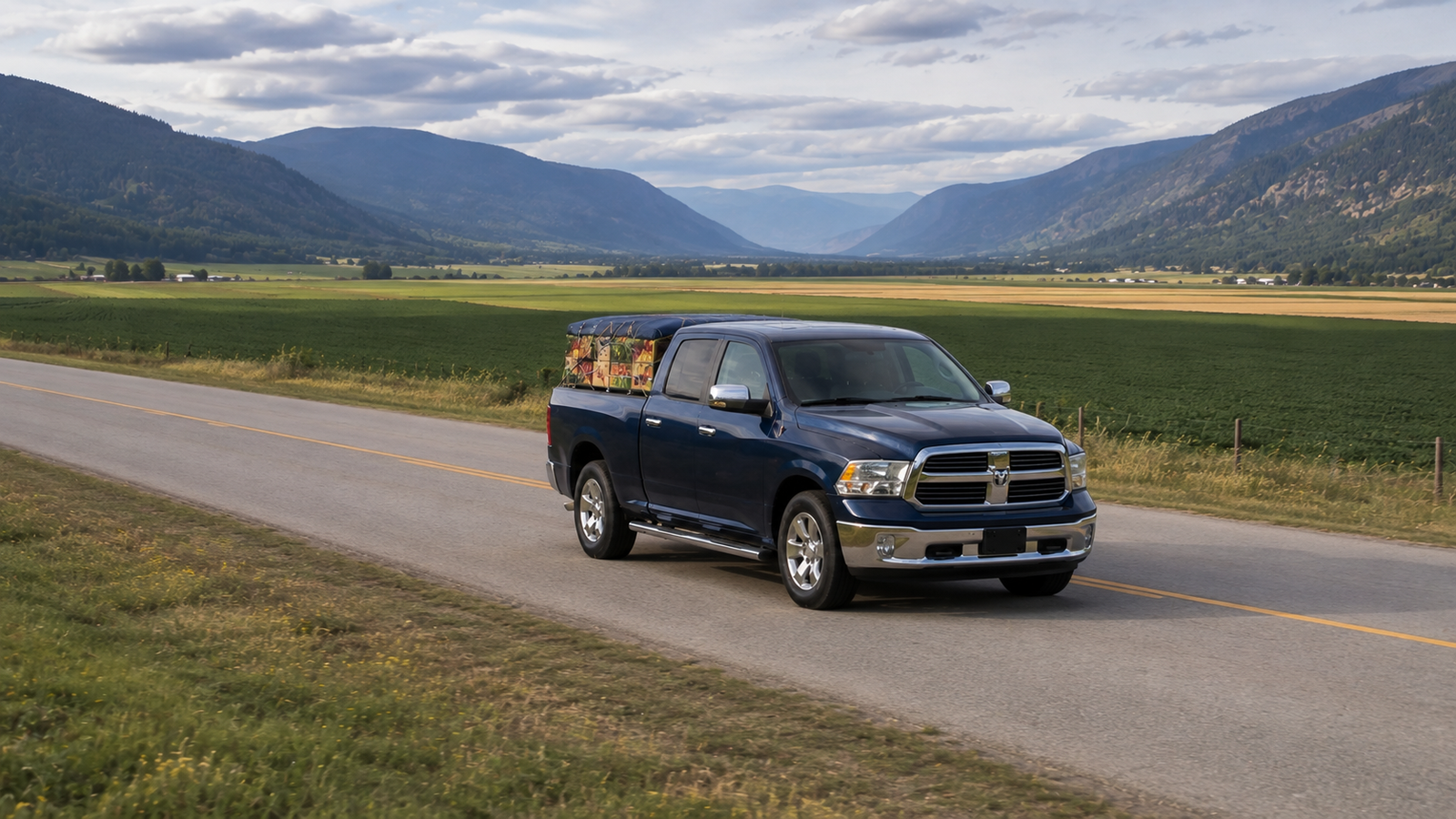
Description
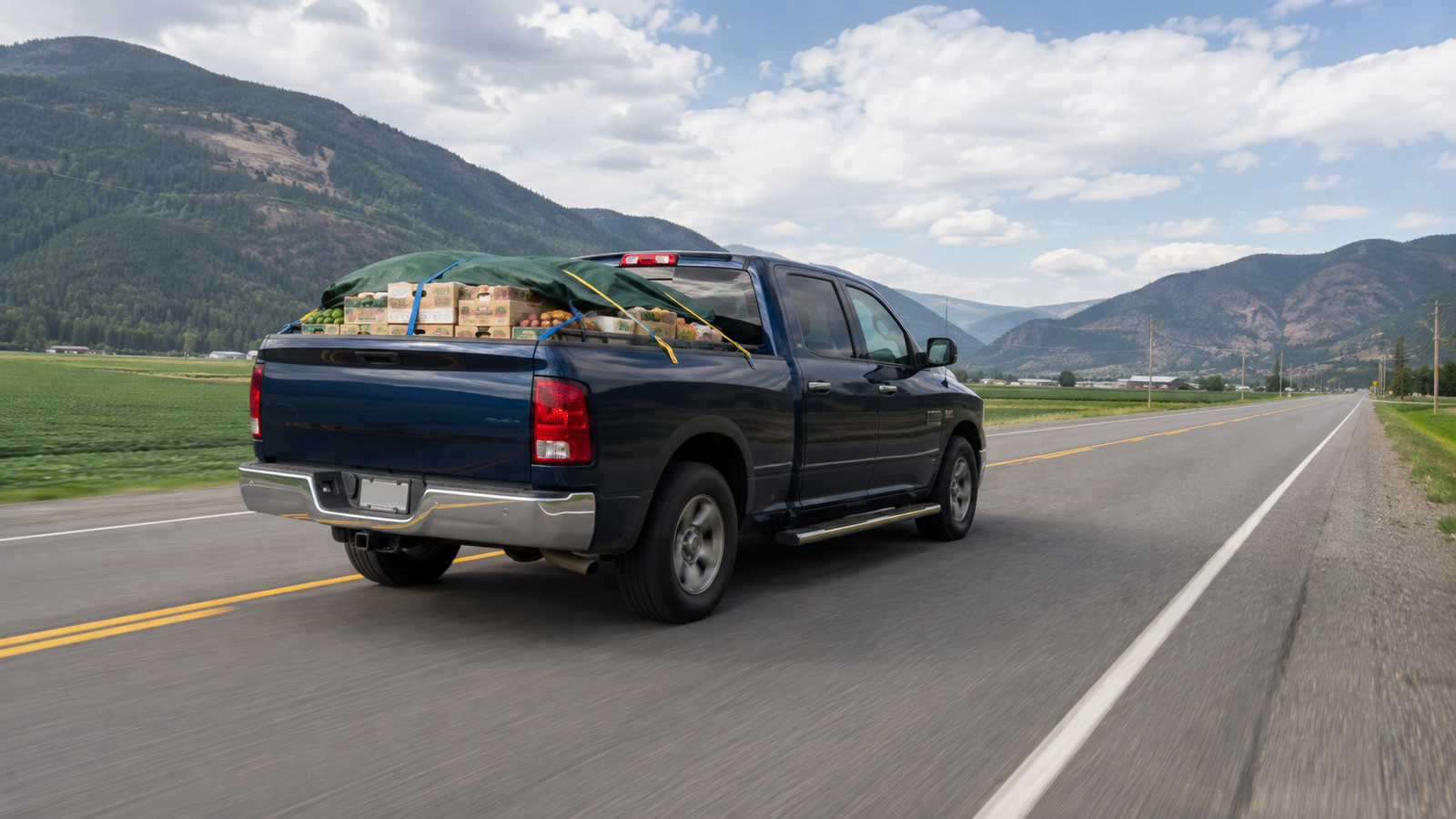
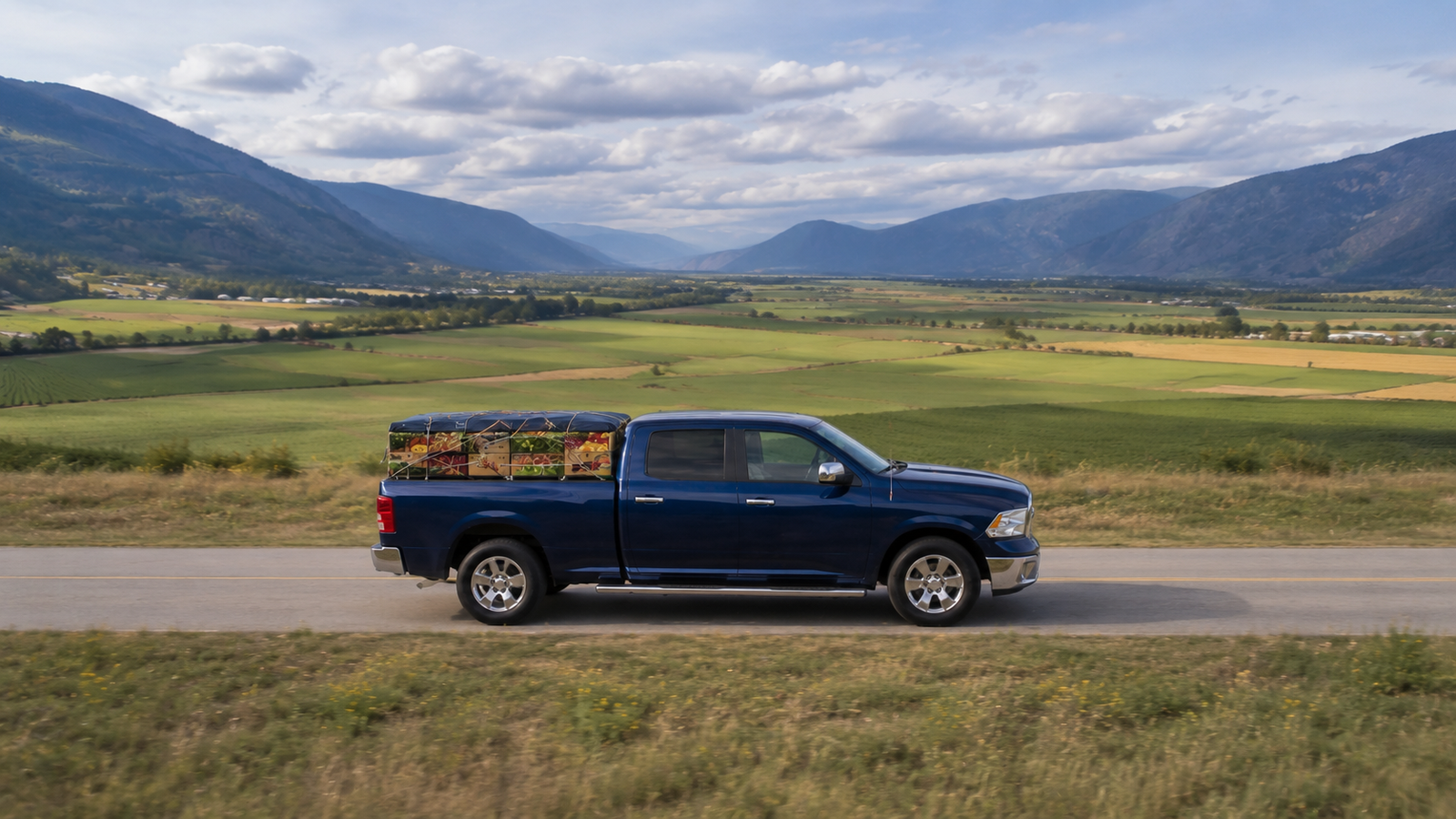
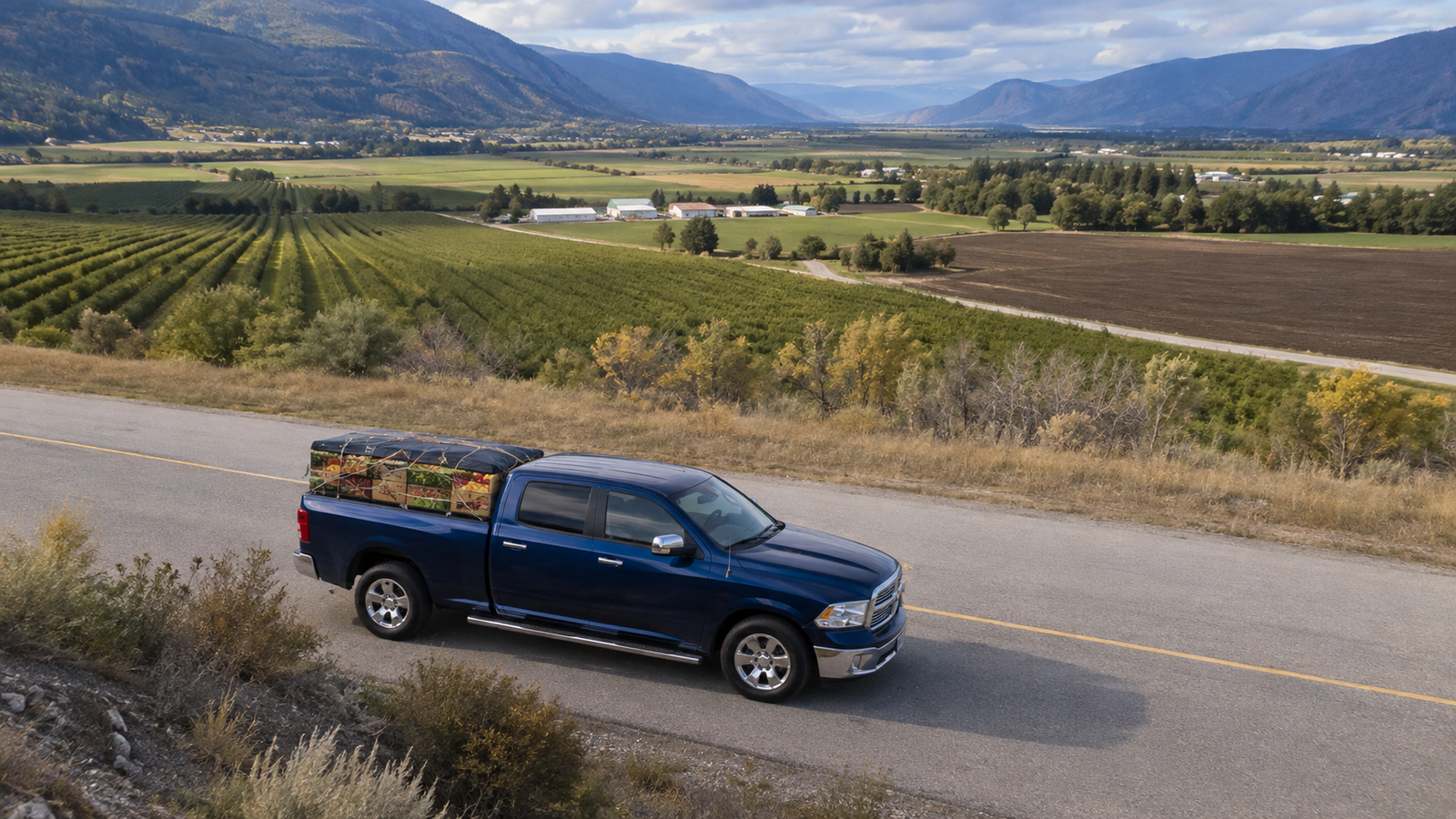
What’s included: $4,100 flat truck rate covers fuel and deadhead, size/weight limits (800 lbs, 5’7″ bed, 60″ height max — larger loads require the trailer at $5,125), layover ($375) and detention ($140/hr — 30 min free at pickup, 30 min free at drop-off, tracked separately) apply on top if triggered.
The run from Vancouver
Creston is about 737 km out, roughly ten hours, on Highway 1 to Hope and then Highway 3 east the whole way. The last obstacle is the one that matters. Kootenay Pass, on the Salmo-Creston section, summits at 1,774 m and is the highest point on the Crowsnest Highway. It opened on 13 October 1963 after six years of construction and $12 million. It takes about 10 metres of snow a year and carries a 3-metre average snowpack, and it is closed for roughly 100 hours over a typical winter for avalanche control. The useful detail is that most of those closures run only two to four hours — twenty-three remotely detonated Gazex cannons above the highway let four avalanche technicians trigger slides day or night from November to mid-May. Kootenay Pass rarely kills a run outright; it delays it. Note also that Creston does not observe daylight saving. In summer its clock matches Vancouver; in winter it is an hour ahead.
What moves here
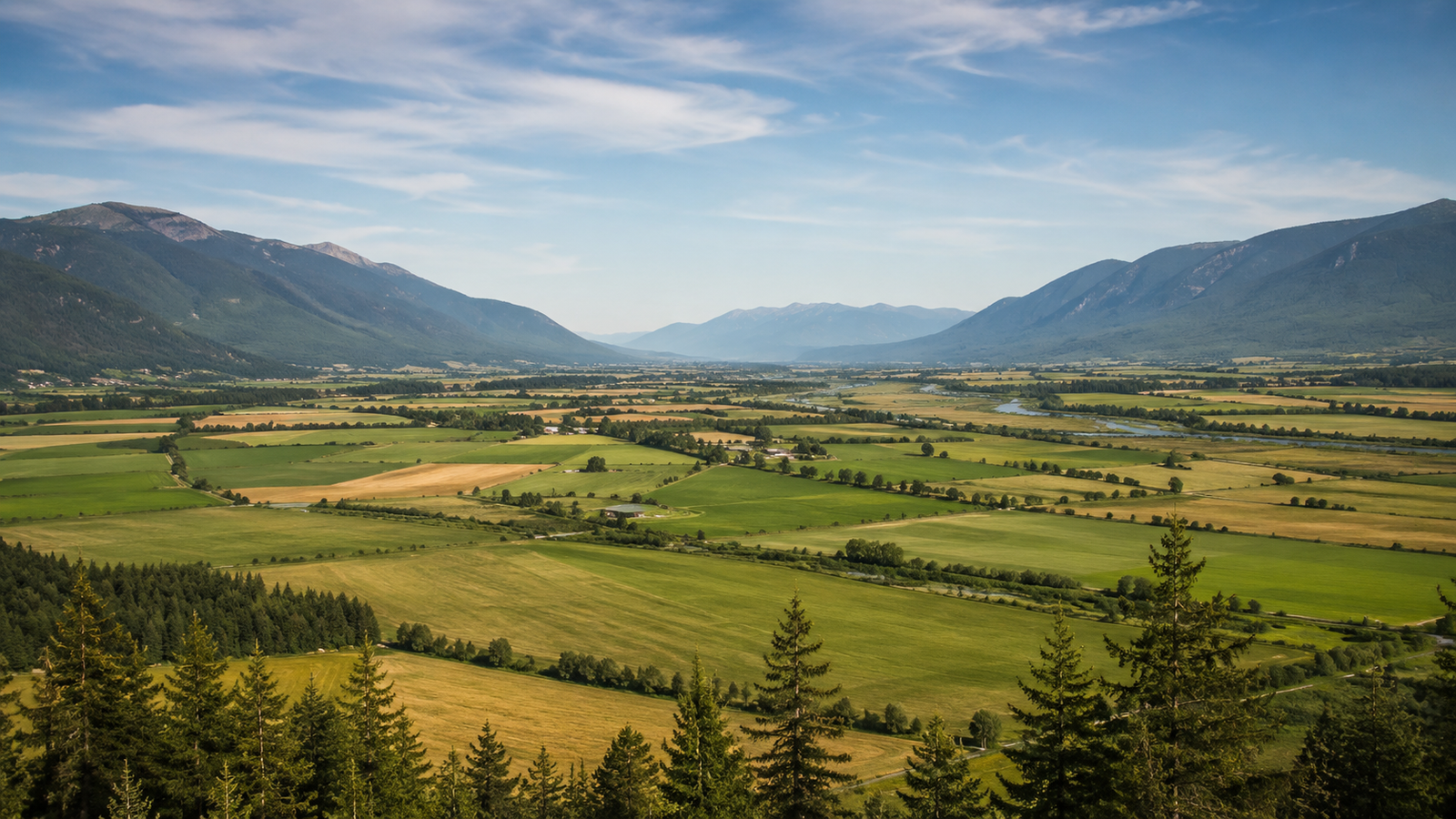
Columbia Brewery has been brewing in Creston since 1898, when it started as Fritz Sick’s Steele Brewery, and Labatt has owned it since 1974. It brews Kokanee and packages other national brands, with canning capacity rated at up to a million cans a day after a 2005 expansion. That is a packaging line, and packaging lines stop when one part is missing. Around it sits the Creston Valley’s agriculture — dairy, poultry, cherries and apples, with viticulture on the warmest valley floors. Forestry runs through family mills in the surrounding communities. The town counted 5,583 people in 2021 and about 6,184 by the 2024 estimate.
Scales and seasonal limits
Coming in you pass the Hope cluster and Castlegar; Yahk sits east of town if you continue toward Cranbrook. All run variable hours. BC posts spring load restrictions as a percentage of legal axle loading — 100%, 70% or 50% — with a tandem group dropping from 17,000 kg to 11,900 kg at 70%. They apply only above 5,500 kg licensed GVW. Winter tires or chains are required on Highway 3 from 1 October to 30 April.
Local fun fact
The flats south of town were fought over with dykes for a century. Crews first dyked the Kootenay River here in 1893, and exceptional flooding the following spring destroyed most of the work. Settlers rebuilt and reclaimed 3,100 hectares, and floods in 1938 and 1948 undid much of that again — leaving ground good for little but hay. The argument ended in a truce in 1968, when about 69 km² was set aside with a managed system of dykes and control structures to break the annual drought-and-flood cycle.
Reviews
There are no reviews yet.